
Tech Utopia or Dystopia? A Look at the Ethical Future of Innovation
From self-driving cars to artificial intelligence that can write essays or mimic your voice, we’re living in a time where science fiction is quickly becoming reality. Technology has the power to make our lives easier, safer, and more connected—but it also raises big questions. Who’s in control? What’s being sacrificed for convenience? And are we building a better world—or just one that’s more efficient at watching us?
The truth is, we’re standing on the edge of a major ethical fork in the road. The same technologies that can cure disease or stop climate change could also be used to manipulate minds or deepen inequality. So, are we heading for a tech utopia or dystopia? Let’s take a look at the issues shaping the answer.
AI and Automation: Help or Harm?
Artificial intelligence can do amazing things, from diagnosing diseases faster than doctors to predicting traffic patterns in real time. But there’s also a dark side. As automation grows, so does the fear of job loss across entire industries. Ethical questions arise about who benefits from these technologies—and who gets left behind. If machines can replace human work, we need to think carefully about how to protect livelihoods and ensure economic stability for everyone, not just tech giants.
Data Privacy in the Age of Convenience
Every time you click “I agree” on a terms and conditions pop-up, you’re giving away a little piece of yourself. Our data is everywhere—tracked by apps, websites, and devices we don’t even think about anymore. While this data can personalize experiences and improve services, it also opens the door to surveillance, manipulation, and identity theft. The challenge is finding the balance between personalization and privacy—without sacrificing our rights in exchange for convenience.
Deepfakes and Misinformation
We’re already seeing how dangerous misinformation can be online, but deepfake technology is about to take it to another level. Videos and audio can now be altered so convincingly that it’s hard to tell what’s real. This could be used for satire or art—but it could also fuel political manipulation, scams, or even blackmail. If we can’t trust our eyes and ears anymore, what happens to truth itself? The ethical responsibility to regulate and verify content has never been more urgent.
Big Tech Power vs. Public Good
With a handful of companies controlling vast parts of the internet, the question of tech monopolies is more relevant than ever. These corporations not only influence what we buy, watch, and read—they shape global policy, affect elections, and store massive amounts of personal data. Are they operating for the public good, or just protecting profits? The growing demand for regulation shows that people are beginning to question whether unchecked innovation can coexist with democracy and fairness.
The Promise and Peril of Bioengineering
CRISPR and other gene-editing tools have incredible potential: curing inherited diseases, extending human life, and even eradicating certain cancers. But these advances also bring ethical minefields. What if we start designing “perfect” babies? Who gets access to these treatments—and who doesn’t? As we gain more power to rewrite our biology, we also risk creating new forms of inequality and discrimination based on genetic traits.
The future of technology isn’t written in code—it’s shaped by the choices we make today. Innovation isn’t inherently good or bad; it’s a tool. What matters is how we use it, who it benefits, and whether we’re asking the right questions along the way. Whether we end up in a tech utopia or a dystopia isn’t up to the machines—it’s up to us. The ethical future of innovation starts with human decisions, and those conversations are more important now than ever.…
Read More


 The last way to secure your PDF files for protection is to add a watermark. A watermark is a unique identification that can be seen on the document, and it acts as proof of ownership. It’s also used to deter people from copying or altering documents without permission. This can help protect your data from being accessed by unauthorized persons, and it also serves as evidence if there is ever any dispute. If someone tries to open a file without the correct password or encryption key, the watermark will be visible – making it easier to trace the source. This is what many organizations and individuals use to secure their sensitive information.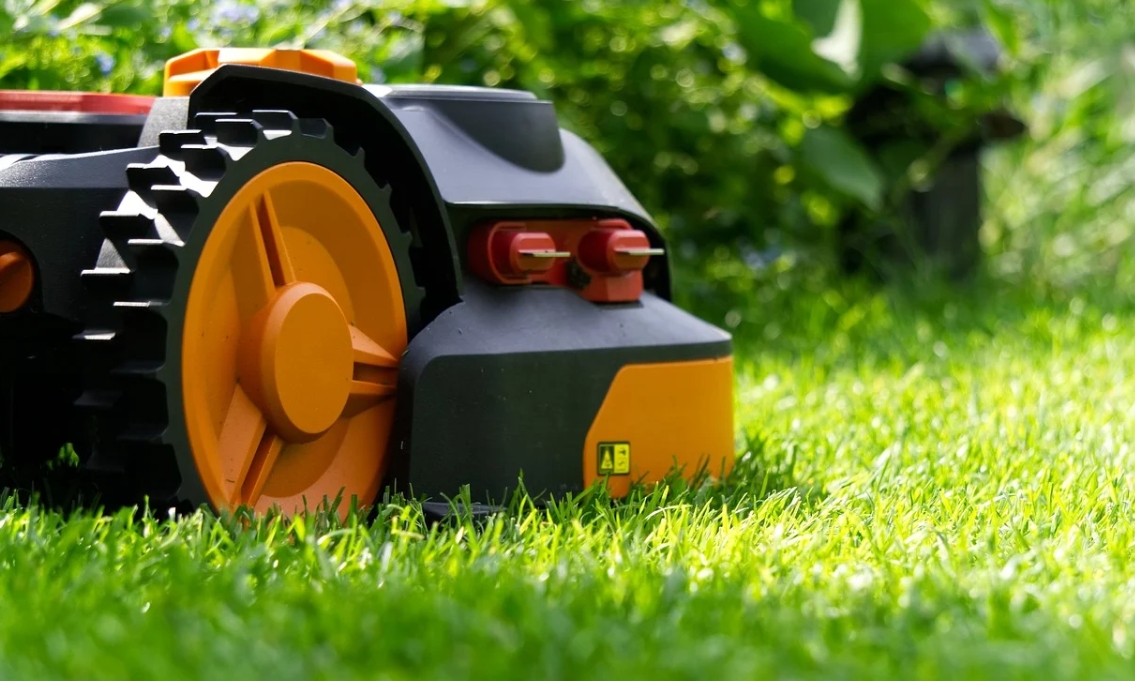
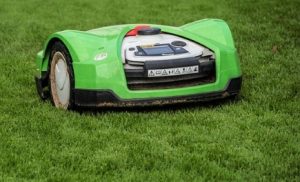 These are perfect for commercial buildings and homeowners who want a set-and-forget system. Although this sounds too good to be true, robotic lawn mowers or Stihl Rasenroboter exist, and you can even purchase them online. Once you purchase the machine and install it, it will do the job daily, and it can be scheduled to mow the lawn. Some of the robotic lawn mowers on the market are battery-operated, and they recharge themselves automatically.
 Just from the name, you can tell that these mowers are hand-powered. Thus, they need you to physically use your energy and push them through the lawn. Ideally, they can be hand-powered or electric powdered. There are also gas-powered lawn mowers. These mowers are equipped with cylinder blades or reel for making cuts.